

Pesquisa indica possível solução verde para solos contaminados por manganês

leia a matéria completa
Pesquisa desenvolve mudas de cana treinadas para enfrentar a seca
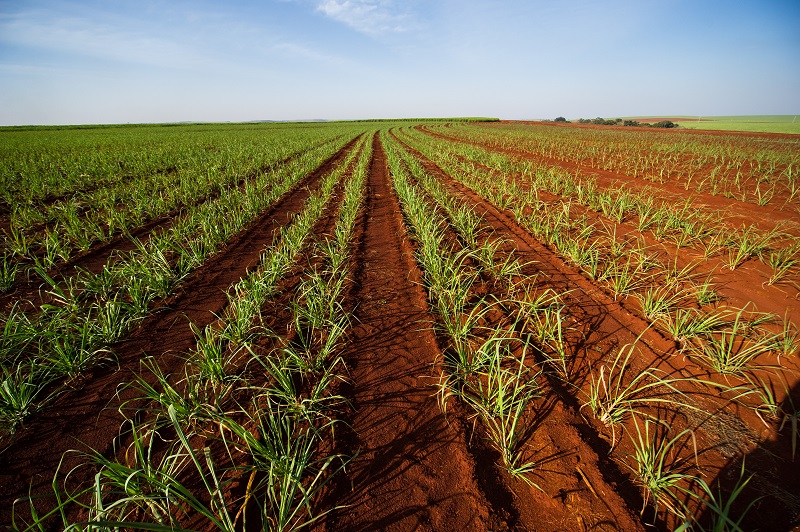
A ideia é que essas plantas sejam, inclusive, capazes de repassar a “memória” da seca para as novas gerações Matéria completa em
Study shows how to increase success rate of restoration initiatives in the Cerrado
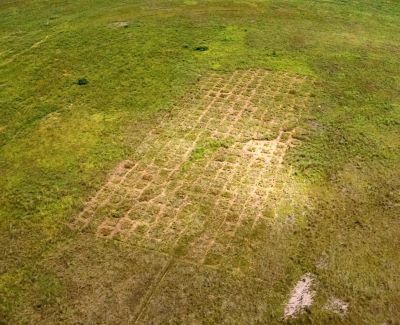
By José Tadeu Arantes | Agência FAPESP – Statistics made available in January 2024 show that while deforestation in the Amazon fell by half in 2023, it increased 43% in the Cerrado, the Brazilian savanna. A research group at the State University of Campinas’s Institute of Biology (IB-UNICAMP) in Brazil dedicated to ecological studies on the Cerrado have already highlighted the urgency of combating destruction of the biome. However, it is not enough to defend what remains: restoration is also needed. Restoration presents a number of challenges, such as constant reinvasion by exotic grasses. Once these have been introduced into pasturelands, they spread vigorously, eliminate native species, and disfigure the herbaceous stratum, which is the Cerrado’s biodiversity reserve and the mainstay of its ecosystem services. They are hard to eradicate even after pasture is abandoned. The main plants in question are the tropical forage grasses Urochloa spp., Melinis minutiflora and Andropogon gayanus. To validate ways of combating invasion or reinvasion by exotic grasses, a pioneering study was conducted by the IB-UNICAMP group at Chapada dos Veadeiros National Park in the state of Goiás, Center-West Brazil. An article on the study by biologist Guilherme Mazzochini and collaborators appears in the Journal of Applied Ecology, a publication of the British Ecological Society (BES). The study was part of the Thematic Project “Restoring Neotropical dry ecosystems – is plant functional composition the key to success?”, for which the principal investigator is Rafael Oliveira, a professor at IB-UNICAMP. He is also the last author of the article. The penultimate author is Lucy Rowland, a professor at the University of Exeter in the UK. The group is supported by FAPESP and the UK’s Natural Environment Research Council (NERC). “Many ongoing restoration projects aim to produce rapid plant cover in the area concerned, but in our study, we showed this isn’t always the best strategy. A large proportion of these projects lack a consistent scientific basis and are unsuccessful because they’re unable to create biodiverse ecosystems that can withstand events such as drought, biological invasion and fire. Any restoration initiative must be based on a profound understanding of the ecology of the ecosystem to be restored. Unfortunately, that’s not usually the case,” Oliveira said. He supervised Mazzochini’s postdoctoral research, which was supported by FAPESP. Biodiversity plays a key role in increasing resistance to invasion by exotic grasses, according to Oliveira. “Our findings show that higher diversity reduces invasion, probably owing to competition for resources in the nutrient-poor, acidic soil of the Cerrado,” he said. In conventional restoration projects, the typical management strategy deployed to eliminate exotic grasses before native species are planted involves controlled burning followed by frequent plowing during the dry season to remove stolons (above-ground creeping stems) and roots of exotic grasses, as well as to kill seedlings that have recently germinated. However, the exotic species recolonize and dominate restored areas within a few years thanks to the large volume of seeds that remain below ground and the constant influx of seeds from the environs. “Ecologists have observed for decades that species-rich local communities are more resistant to invasion than species-poor communities. Experiments with biodiversity and ecosystem functioning in regions with a temperate climate have confirmed these observations. In our experiment, plant communities with varying numbers of species were tested to understand how biodiversity influences productivity, nutrient cycling and resistance to invasion, among other things. Our study was the first to conduct an experiment involving biodiversity in the Cerrado and one of only a few ever conducted in the tropics,” Mazzochini said. Studies involving temperate ecosystems show that communities with more diversity tend to have lower levels of available resources, presumably owing to complementary use of resources by species with different ecological strategies. This reduces invasion by exotic species, which generally require large amounts of resources to maintain rapid growth. “Plants in any environment survive and grow by means of a range of ecological strategies associated with the anatomy and morphology of their leaves, stems and roots. These characteristics are known as functional attributes,” Mazzochini explained. “Based on functional attributes, plant species can be classified on a spectrum from conservative to acquisitive. The most acquisitive species grow rapidly and have lighter, more tender vegetative organs that need more resources. These species, which include exotic grasses, are considered more competitive. On the other hand, conservative species grow more slowly and have a more robust structure with denser leaves, stems and roots, so that they can withstand adverse conditions such as severe drought and low availability of nutrients.” Variation in functional attributes is used to classify species along the conservative axis, while ecologists recently introduced the label collaborative to identify adaptability, he explained. The concept centers on specific root length (SRL), defined as resource acquisition (absolute root length) divided by resource investment (mass). “There’s a direct correlation between SRL and root diameter. Thinner roots can absorb nutrients more autonomously and efficiently. Thicker roots often depend on symbiosis with mycorrhizal fungi, which establish mutualistic relationships with roots, gaining access to nutrients not available to plants, generally phosphorus, and in return receiving the carbon produced by photosynthesis. This is a fascinating example of how plants interrelate with other organisms in order to prosper in many different environments,” he said. The two axes, conservative and collaborative, were considered in the study, which involved a biodiversity experiment conducted in an area of abandoned pasture taken over by Chapada dos Veados National Park. “We installed 302 square plots measuring 2 m by 2m, and sowed zero to eight native grass species with a density of 1,000 seeds per square meter,” he said. The eight native species were Axonopus aureus, Axonopus siccus, Andropogon fastigiatus, Aristida flaccida, Aristida riparia, Loudetiopsis chrysothrix, Schizachyrium sanguineum, and Trachypogon spicatus. The experimental plots seen from the air (photo: Paulo Bernardino) As anticipated, a wave of reinvasion by exotic grasses occurred, reflecting the long period during which the area in question had been used as pasture. The invaders were A. gayanus, M. minutiflora, and three species of
Melhores cientistas do mundo: saiba quem são pesquisadores da Unicamp que integram ranking
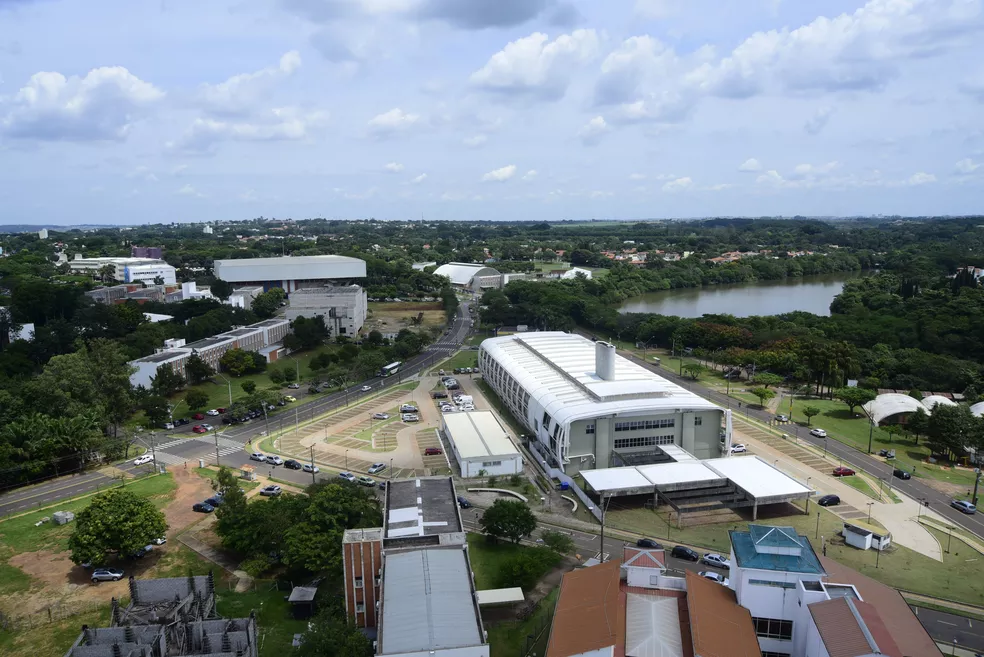
Veja matéria completa
Os mistérios das árvores da Amazônia que têm altura de prédio de 18 andares
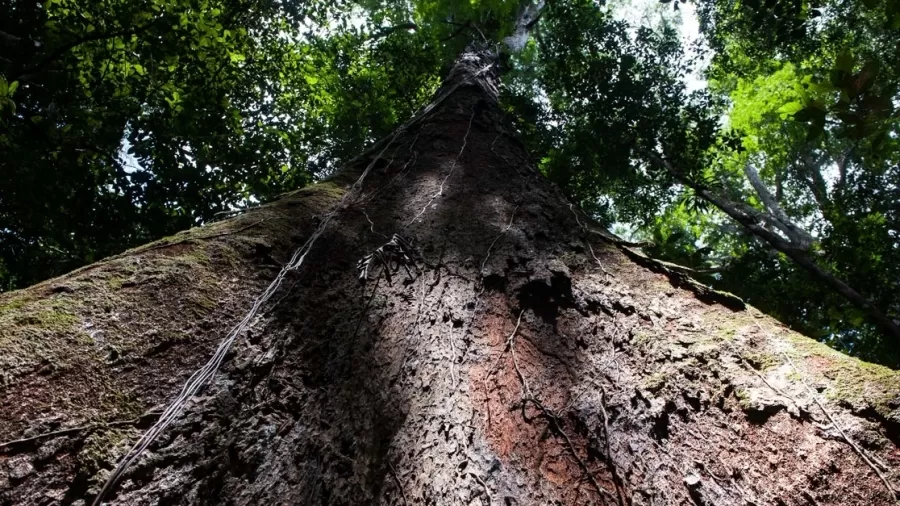
https://www.uol.com.br/ecoa/ultimas-noticias/2024/02/15/pesquisadores-investigam-os-misterios-das-arvores-gigantes-da-amazonia.htm?cmpid=copiaecola
Ilha nada deserta
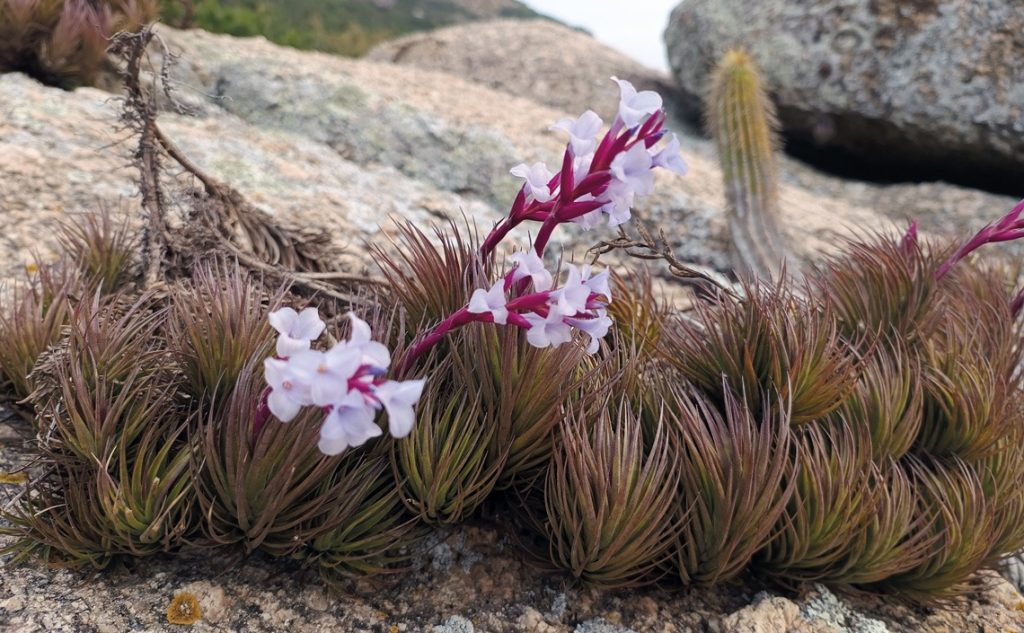
Ilha nada deserta , da Revista Pesquisa FAPESP Não há habitantes humanos na ilha dos Alcatrazes, 35 quilômetros ao sul de São Sebastião, litoral paulista. Mas cerca de 1.300 espécies de plantas e animais vivem no local, entre elas milhares de aves marinhas que lá têm seu pouso (como os alcatrazes). Daí a denominação tupinambá para o arquipélago: Wyrá r-etá-ma, ou local das aves, que batiza a bromélia recém-descrita, Tillandsia uiraretama, que só vive ali e recobre os paredões de granito com suas flores de cor lilás. A espécie mais aparentada, no continente, tem flores menores e brancas. Imagem enviada pelo botânico Gabriel Sabino, estudante de doutorado na Universidade Estadual de Campinas (Unicamp) Sua pesquisa rende fotos bonitas? Mande para imagempesquisa@fapesp.br. Seu trabalho poderá ser publicado na revista. Este texto foi originalmente publicado por Pesquisa FAPESP de acordo com a licença Creative Commons CC-BY-NC-ND. Leia o original aqui.
I Simpósio de Orquídeas UNICAMP: Interações Essenciais e Preservação
Ei você que se interessa por orquídeas! Está chegando o primeiro evento 100% voltado para Orquídeas suas interações e preservação, promovido pela Unicamp em parceria com o Programa de Pós Graduação Biologia Vegetal!! Acontecerá nos dias 08 e 09 de abril, o primeiro I Simpósio de Orquídeas UNICAMP: Interações Essenciais e Preservação! Teremos palestras, mesas redondas, minicursos e apresentações de pôsteres sobre as diferentes pesquisas relacionadas aos estudos sobre as Orquídeas. As inscrições estão abertas e o primeiro lote possui taxa reduzida de 20 reais. Garanta a sua! Confira mais informações em: https://www.even3.com.br/i-simposio-de-orquideas-unicamp-interacoes-essenciais-e-preservacao-521925/ Instagram: @sou_unicamp
